What is reading comprehension?
Click the link below to see the PowerPoint presentation

A smart grid is an electricity network/grid enabling a two-way flow of electricity and data whereby smart metering is often seen as a first step. Smart grids – as a concept – became known over a decade ago. An introduction with definitions, trends and essential characteristics of smart grids.
Big data and advanced analytics are essential technology drivers in smart grids whereby analytics shift to the edge, as in edge computing. Smart grids leverage more technologies but aren’t just about IT nor even technologies.
A smart grid is an electricity network enabling a two-way flow of electricity and data with digital communications technology enabling to detect, react and pro-act to changes in usage and multiple issues. Smart grids have self-healing capabilities and enable electricity customers to become active participants.
A smart grid serves several purposes and the movement from traditional electric grids to smart grids is driven by multiple factors, including the deregulation of the energy market, evolutions in metering, changes on the level of electricity production, decentralization (distributed energy), the advent of the involved ‘prosumer’, changing regulations, the rise of microgeneration and (isolated) microgrids, renewable energy mandates with more energy sources and new points where and purposes for which electricity is needed (e.g. electrical vehicle charging points).
An electrical grid or electric grid is a network to deliver electricity from the producer(s) and places where it’s generated and transformed (power plants and substations) to the final destinations where electricity is ‘consumed’: households, businesses, various facilities and the consumer in general.
In practice it is a highly interconnected network with several components such as substations, transmission lines and wiring, distribution lines, transformers and more.
Available at https://www.i-scoop.eu/industry-4-0/smart-grids-electrical-grid/. Acceso el 1 de octubre, 2020
REALICE LAS ACTIVIDADES QUE SE ENCUENTRAN AL FINAL DEL TEXTO
SMART GRID SYSTEM DELIVERING NEXT-GENERATION UTILITIES, KNOW HOW!
Available at https://medium.com/@mikethomsan/latest-trends-in-smart-grid-technology-in-the-utilities-industry-9e2f295d3a4f. Acceso el 2 de octubre, 2020.
Lea el texto en español en clase
Dielectric Strength
Dielectric Strength reflects the electric strength of insulating materials at various power frequencies. Or it can be defined as the measure of dielectric breakdown resistance of a material under an applied voltage and is expressed as Volts per unit thickness. It is an indicator of how good an insulator a material is.
Lea el texto en español.
Control and limitation of high short-circuit currents
Nasser D. Tleis BSc, MSc, PhD, CEng, FIEE, in Power Systems Modelling and Fault Analysis, 2008
Again, we will use the system and data of Figure 9.5. In addition, the ZPS system infeed at 400 kV is assumed equal to the PPS infeed. The autotransformers have unloaded, closed 13 kV delta-connected tertiary windings and their equivalent 400, 132 and 13 kV windings ZPS reactances on 240 MVA base are 19.2%, 0% and 24%, respectively. The generator-transformers' windings are star-delta connected and the ZPS reactance is 11% on 100 MVA. Calculate the single-phase short-circuit fault current at the solid 132 kV busbar under the following conditions:
Normal condition with autotransformer's delta windings closed.
Autotransformers's delta windings are opened. The core construction is 3-limb. The effective equivalent 400 kV, 132 kV and neutral reactances are –4%, 12% and 100% on 100 MVA base, respectively.
Delta windings closed
From Example 9.1, the PPS/NPS (negative phase sequence) Thévenin's equivalent impedance ‘seen’ at the fault point is equal to 0.0188 pu. Also, the ZPS Thévenin's equivalent impedance ‘seen’ at the fault point is calculated as

As expected, in this example, the single-phase fault current is 20% higher than the three-phase fault current.
Delta windings opened
The opening of the autotransformer delta windings for 3-limb cores would produce changes in the ZPS equivalent reactances of the autotransformers, as discussed in Chapter 4. The Thévenin's PPS/NPS reactance is unchanged and is equal to 0.0188 pu. The ZPS Thévenin's equivalent impedance ‘seen’ at the fault point is amenable for hand calculation but requires one simple star-to-delta transformation. It is easily shown that

It is interesting to note that although opening the delta windings increases the ZPS Thévenin's impedance by a factor of 0.0324/0.00895 = 3.6, the single-phase fault current is reduced by 33% which in this example is quite significant.
Where the autotransformers are of 5-limb core or shell-type construction, then as we discussed in Chapter 4, the opening of the delta winding will cause the ZPS shunt neutral impedance to become very large. Values may range from 3000% to 5000% on 100 MVA base. The reader may wish to repeat the calculation of single-phase fault current for a 5-limb or shell-type autotransformer and compare with questions (a) and (b) above.
Available at https://www.sciencedirect.com/topics/engineering/autotransformers. Acceso el 4 de octubre, 2020.
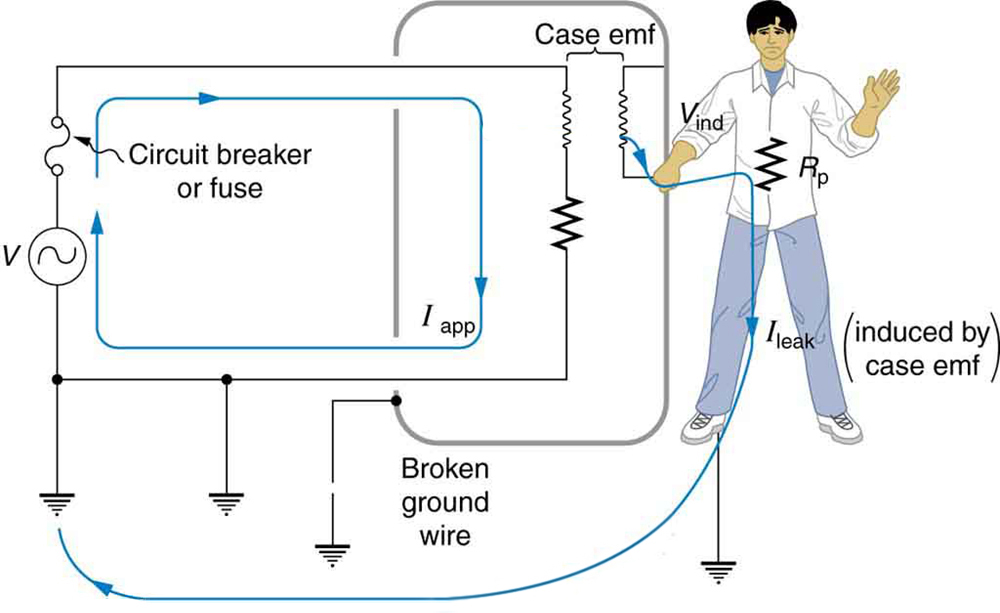
The electrical current in your home's wiring system consists of a flow of electrons within metal circuit wires. The current comes in two forms, a negative and a positive charge, and this charged electrical field is created by huge generators operated by the utility company, sometimes many hundreds of miles away. It is this polarized charge than effectively constitutes the flow of electrical current, and it arrives at your home through a vast network of high-tension service wires, substations, and transformers that blanket the landscape.
The negative half of the charge is the "hot" current. In your home's wiring system, the hot current is normally carried by black wires, while the neutral wires, which are white, carry the positive charge. Both sets of wires enter your home through the utility's main service wires, run through your electrical service panel, and run side-by-side through every circuit in your home.
The physics of electrical flow are more complicated than most simple explanations can convey, but essentially, electricity seeks to return its electrons to "ground"—that is, to discharge its negative energy and return to equilibrium. Normally, the current returns to ground through the neutral wires in the electrical system. But should some breakdown of the pathway occur, the hot current may instead flow through other materials, such as wood framing, metal pipes, or flammable materials in your home. This is what may happen in a short circuit situation, where most electrical fires and shocks originate. A short circuit is when electricity strays outside the wires it is supposed to flow through—in other words, when it takes a shorter path to ground.